
The economics of AI

Who's making the AI money?
This blog post is not investment advice. Although I'm still registered, I'm not an advisor anymore.
"AI" is the most important thing to be happening to science today. English computer scientist and "AI Godfather" Geoffrey Hinton was awarded a Nobel Prize yesterday (in physics, to everyone's surprise). Thirty years ago, Hinton established the principles that power ChatGPT.

"AI" is not only a scientific revolution. It is also the most important thing to be happening to the economy today. So, I'm asking: who's making the money?
This email is my humble attempt to answer this question. This is Part I of "the economics of AI." Part I is merely descriptive. In two weeks, Part II will be my humble attempt to *explain* the answer in Part I.
Prediction: transformers are bigger than the Web
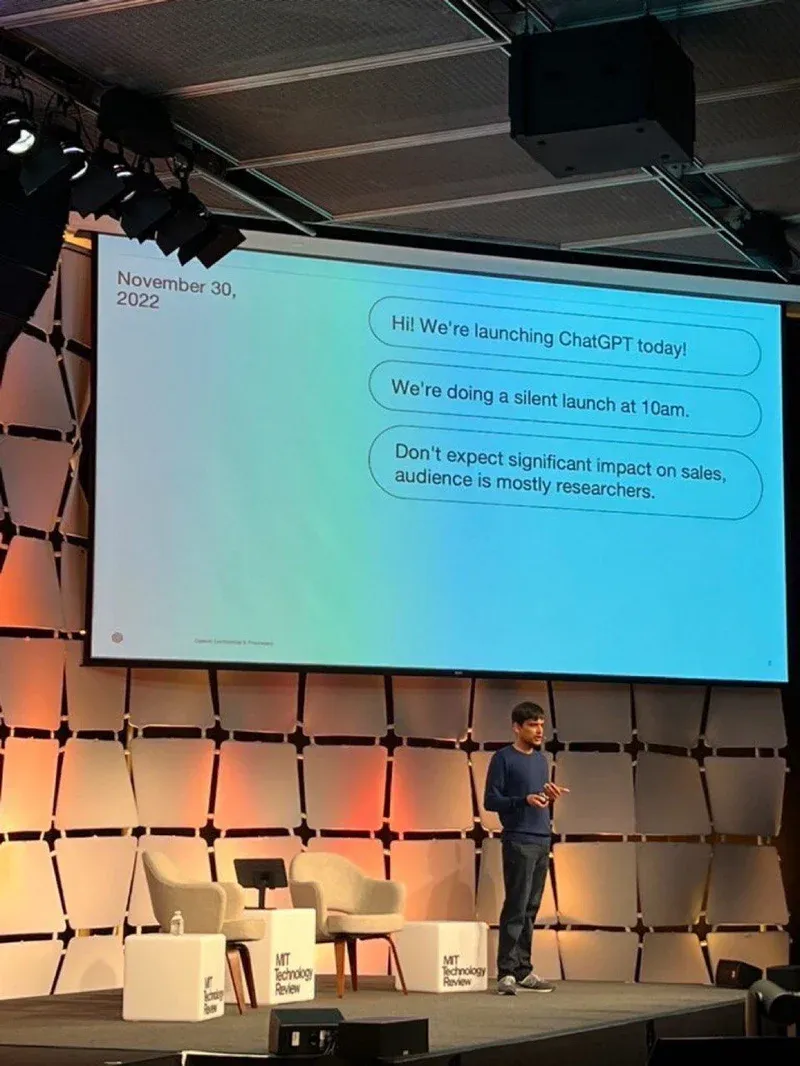
"AI" now essentially means the transformer architecture (or "transformers") and large language models (or "LLMs"). "AI" mostly meant other things before November 30, 2022, when Open AI publicly announced ChatGPT. But that's what "AI" really means now: transformers, LLMs.
Transformers, invented in 2017, are software systems that can teach "stuff" to a computer at a reasonable cost. An LLM is the product of transformers when stuff is words. ChatGPT is an LLM produced by a transformer designed by researchers at Open AI.
Transformers are undeniably the greatest technological revolution since the World Wide Web. And if you ask me, I predict that they are going to be an even greater industrial revolution than the Web. In other words, I predict that transformers will transform (pun not intended) our economy faster, and more deeply, than the Web did and continues to do. Again, I'm not 100% certain. This is just a forecast.
Previous economic revolutions
We know who made the money during the first Industrial Revolution. It was the iron, coal, and textile British capitalists. It was not James Watt and the other inventors of the steam engine. It was not the railway entrepreneurs. It was not the Belgian artisans or the French farmers.
We are told over and over again who made the money during the gold rush: allegedly, it was not the miners, and not even the owners of mining companies, but Levi Strauss and the likes who provided picks, shovels, and clothing to the miners.
We also know who has been making the money since the start of the Web revolution: cloud services providers (Microsoft, Amazon, Google), logistics enablers (Amazon), operating system and app store providers (Google, Apple), and network-effect social media (Facebook). It was definitely not infra builders (Cisco). It was not really computer builders either (IBM, Compaq, Dell, etc.).
So, I'm asking again: who's making the AI money?
"Transformers"... "LLMs"... Give us concrete faces.
Let's start by reviewing who are the people building AI or building with AI. For simplicity, I'm defining four groups: inventors, architects, horizontal applicators and vertical applicators (spoiler: that's us at Vega!).
Inventors
Humanity has taught sand how to think. I almost mean this literally: we combine silicon and rare-earth elements, run electric currents through them, and what comes out are imitations of Shakespeare's verses or investment analyses.
It took us centuries to get to this point. It took great inventors in the past century: Turing for the concept of machine computation (1940s), Shockley for the transistor (1947), LeCun, Hinton, and Bengio for deep learning and the first neural networks that preceded the transformer (1980s), Vaswani and others at Google for the transformer architecture mentioned earlier (2017).

Trust me, these people are not the ones making the money. They're a different breed. They don't care. They advance our species and don't ask for anything in return, or not much. They work in labs, raise insignificant amounts of money by Silicon Valley standards, and hire very few people by Corporate America standards. Their payoff is mostly academic recognition, paper citations, some grants, and seven figures at Meta when they decide to end their careers in the private sector, like LeCun did. Compared to their contributions to the field, it's peanuts. The valuation of their labs is $0, they're non-profits.
Here's French intellectual Charles Péguy about those inventors (he was talking about Pierre and Marie Curie, a Nobel-Prize winning couple of physicists):
"One must divide men into two categories. There are those who concern themselves only with their sex and their bank account. I call that the Dead Sea. Then there are those who concern themselves a little with something other than their pleasure and their money."
Charles Péguy
Well, I'm part of the Dead Sea. I mean, I guess? And so are you, and so are my next three categories: architects, vertical applicators, and horizontal applicators.
Architects
Significant scientific discoveries will attract builders. They will try and find industrial purposes to them. In our case, I call them "architects."
Typically, the "architects" I'm talking about are a group of 100 PhDs who spent 10 to 20 years in the past in the fields of machine learning, physics, and math. They know how to talk to a machine. They have to know the physics of computers and chips, because they are their main cost centers.
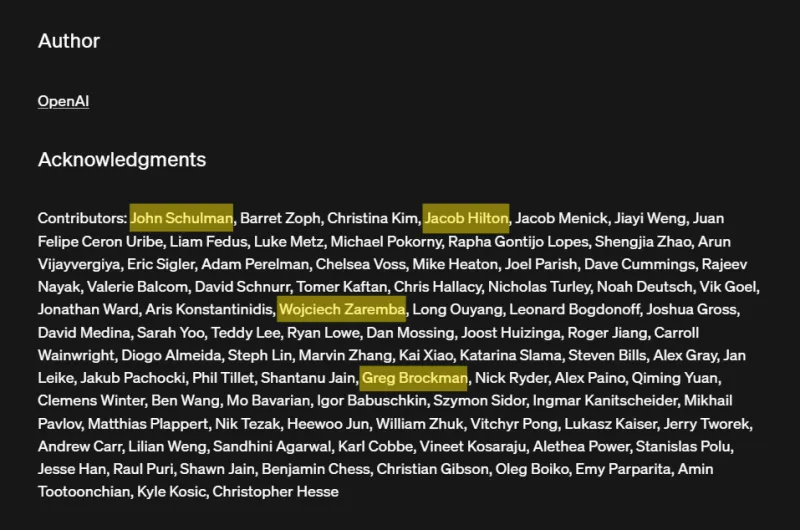
Architects raise $1 billion at a $5 billion valuation. They code transformers for 2 years, buy or rent tens of thousands of GPUs (specialized computer chips), and run them on 10 trillion words for a few months. The result is a language or vision model which they license to individuals or enterprises (direct enterprise users or applicators, described in the next sections, that will repackage models into different enterprise solutions).
Architects have a shot at a $1 trillion company, or even more, if they can find the next breakthrough (nowhere to be seen yet, LLMs are getting faster and more capable, but there hasn't been any fundamental change since the launch of ChatGPT). So, yes, there is good money here.
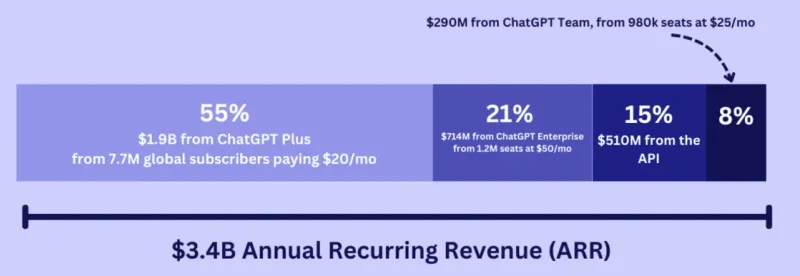
The names of our architects are: OpenAI, Anthropic, xAI, Cohere, Mistral AI, Meta AI, Google DeepMind, or AI21 Labs. OpenAI is already valued at $150 billion. OpenAI went from $0 to $150 billion faster than any other company in the history of capitalism (inflation-adjusted).
Horizontal applicators
But there's only so much you can do with a base model, right? ChatGPT is fantastic, but it doesn't solve many business problems.
Here come the horizontal applicators. They build "wrappers" around base models and deliver them to all industries or consumers, agnostically. They focus on specific, well-defined problems. They only need to raise $100 million, not $1 billion. They don't need 100 PhDs, but maybe one or two, and good software developers, and sales. A team of 15 can cut it in the early days.
Their names are JasperAI, Replit, or Character.ai. What they build are databases and trees of prompts around those databases, to provide "templated" outputs tailored to specific needs. JasperAI helps you write marketing copy and Replit helps you write code. Character.ai helps you create characters and converse with them.
They have a shot at building a $20 billion company, because they cater to everyone, and their total addressable markets are huge.
There is some money here! Not as much money as the architects, but the horizontal applicators have giant total addressable markets, so they can become decacorns.
Vertical applicators: this is us at Vega Minds!
Hi! Let us enter the newsletter please, thank you!

Vertical applicators don't care about the rest of the world. They have one niche and they focus on it. Ours is independent financial advisors. For some other vertical applicators, it's physicians (Nabla AI), or lawyers (Casetext), or dog owners (I don't know? I mean, I guess? There has to be an AI solving some niche problem for the 1 billion dog owners in the world).
Just like horizontal applicators, vertical applicators essentially code "orchestrators" of base models. Orchestrator is just a fancier word for wrapper. The product is a mix of databases and trees of prompts. It tends to make a greater impact on customers' lives, because the product is hyper-focused, more customized, more deeply integrated. Let's say the impact of a vertical application is 3x greater for each user. But the horizontal markets are 50x larger.
As far as concrete amounts, well, I happen to know one good example, and I know it quite well.
Vega Minds raised an angel round at an $8 million valuation a year ago. Our valuation is somewhere between $15 million and $25 million today. Depending on product execution and traction, it could be $40 million next year, or more, or less.
Initially, we were only two guys. And we've been an actual (small) team for a year. Everyone is an IC (individual contributor). Everyone writes code and talks to users. And the product works and delivers value. We didn't need 15 sales and 15 devs. As we keep growing, I'm 100% sure an A-team of 20 talented ICs can take on any software company established before the LLM era in our industry.
We have a 0% chance at building a $5 billion or larger business due to the sheer size of our market and the fact that we're not pursuing horizontal growth plans (which carry much more risk). We have a 5% chance of building a business worth more than $500 million. I like to think we now have a 33% chance of building a business worth $100 million or more. And by now, I'm confident that our product will still exist in ten years. With these odds and this fact, I sleep well at night. Our probability-weighted expected payoff is much lower than that of a horizontal SaaS entrepreneur who has a 1% chance of building a $20 billion company. But at least I can plan to have a life and start a family... I guess?
So, again, if you compare our stats with the architects and horizontal applicators, they pale in comparison. We're not making the money.
But who the heck is making the money?
Combined market cap of inventors: $0 (this is quite obvious).
Combined market cap of architects: $250 billion (this is easy to estimate given the small number of players here, and OpenAI and Anthropic together being 80% of the total with public valuations).
Combined market cap of horizontal applicators: $100 billion (ballpark estimate).
Combined market cap of vertical applicators: $50 billion (ballpark estimate).
All in all, we're talking $400 billion, which is less than 1% of the combined GDP of the US and Europe. So who's capturing the value?
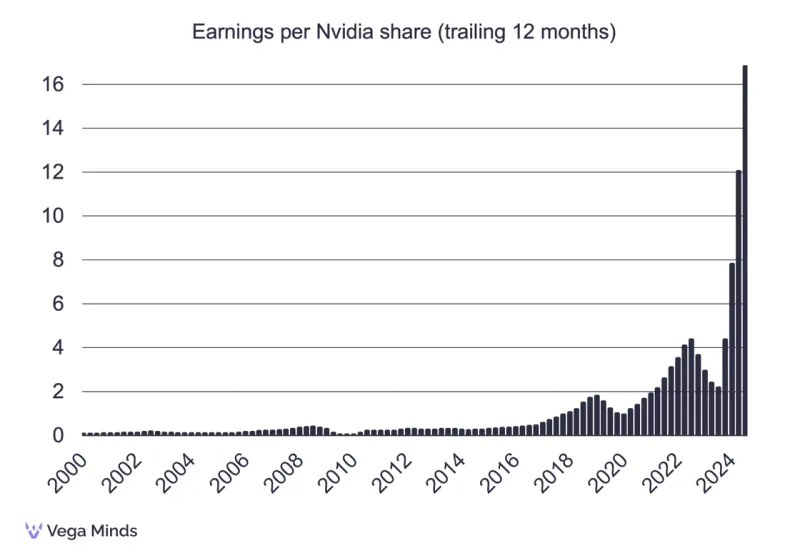
Well, Nvidia is up $2,500 billion since the release of ChatGPT. And Corporate America is up $15,000 billion (S&P 500 Index). You can make the argument that half of the S&P 500's gains come from deflation and decent soft landing prospects. But the rest is definitely AI. And 100% of Nvidia's gains are AI.
So, the main winner in AI is hardware (Nvidia). And the second main winner is: non-AI companies that can cut costs (Corporate America). Could one have guessed it, before the fact?
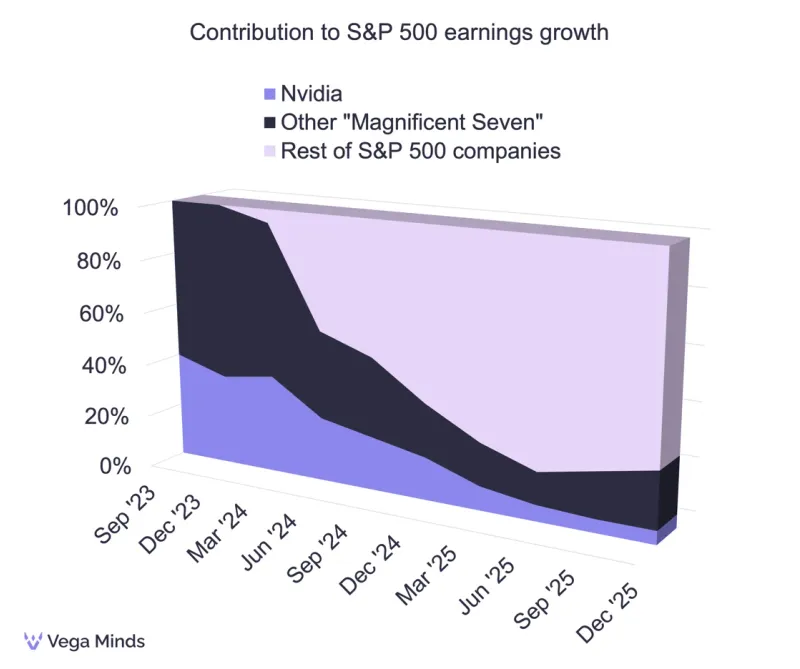
We have a clear answer now. But we don't have the explanation. It's coming in Part II. Stay tuned!